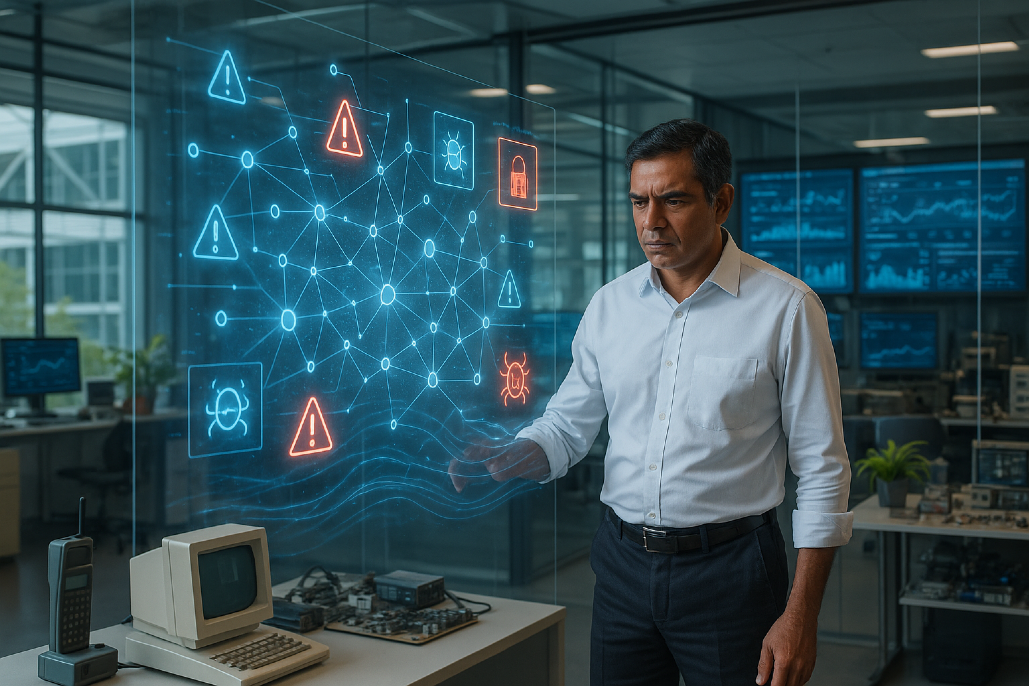
I'm exploring how power requirements in the mobile era reshape sustainability, resilience, and network planning. Can we reuse kit, design for repair, and cut waste while still meeting rising demand? It's a practical, optimistic path if we treat power as a first-class network feature ...
Power requirements in, The mobile era demand, Constant charging, life
I've watched fixed-line, wireless, and mobile all converge over my career, but nothing has forced sharper thinking than the power requirements in the mobile era. The always-on internet in our pockets has shifted mobile from 'nice to have' coverage into a national utility, and utilities live or die by how intelligently they use energy.
We're moving through 5G and now talking seriously about 6G!
So the real constraint I see isn't imagination, it's power, carbon usage, and the ability to keep services running when conditions are less than perfect. I remember when mobile data felt like an add-on, something you checked occasionally and forgave when it was slow.
Smartphones made data the default behaviour, and 4G made that behaviour dependable enough to become mainstream. That mainstream expectation now applies everywhere: homes, offices, factories, hospitals, transport hubs, and increasingly to devices that never 'log off'.
Power requirements in the mobile era rise not just because there are more users, but because the network is becoming denser, more software-defined, and more critical to daily life.
The uncomfortable truth is that we can't scale resilience by simply throwing more electricity at the problem. If we do that, we'll meet demand in the short term and fail our environmental responsibilities in the long term.
That's why I keep coming back to mobile energy efficiency as a design principle rather than a nice KPI on a dashboard!
When energy efficiency is treated like coverage or latency - something we engineer for upfront - we start making better decisions about everything from site selection to radio configurations to how we cool equipment.
Decommissioning older generations, like 3G, should be a sustainability opportunity rather than a disposal event. I'm convinced that the circular economy mindset belongs in telecoms just as much as it does in consumer electronics. We can recover equipment, refurbish what is still viable, and harvest components where re-use is safe and sensible, because not every piece of legacy hardware is 'e-waste' the moment a new standard arrives.
Done properly, this reduces embedded carbon and gives operators more flexibility when supply chains are strained.
At the same time, I don't think we should pretend that reuse alone will solve power requirements in the mobile era. Newer radios can be more efficient per bit, but total traffic keeps climbing, and densification has its own energy overhead. The path forward looks like a blend of better hardware and smarter operation: switching capacity on only when and where it's needed, reducing idle draw, and optimising the network in near real-time so we stop paying an energy tax for 'just in case' provisioning.
This is where I see AI genuinely earning its keep!
Predictive maintenance isn't glamorous, but it is transformative, because preventing a failure is almost always cheaper and greener than responding to it. If models can detect early signals of degradation - thermal anomalies, rising error rates, power supply drift, fan wear - we can dispatch engineers to fix small issues before they cascade into outages.
That approach supports business continuity while also cutting unnecessary truck rolls, wasted spares, and premature swaps, which ties directly back into green mobile technology rather than treating it as a separate agenda.
Power resilience is the other half of the equation, and it's getting harder as networks become more essential.
Battery back-up, generators, and the agreements that sit behind them need to be treated as part of the network architecture, not as an afterthought bolted onto a site. I keep thinking about battery sustainability here, because 'more batteries' isn't automatically 'more resilient' if the chemistry, lifecycle, testing regime, and recycling pathway aren't engineered from day one. A resilient network needs dependable energy storage that's monitored, periodically tested under load, and maintained with the same discipline we apply to transmission and core capacity.
National emergencies are the scenario that makes all of this real!
In calm times, it's easy to assume the grid will behave, fuel deliveries will arrive, and parts will be available. In a crisis, those assumptions break first, and the public expectation doesn't lower just because conditions are tough. So when I think about power requirements in the mobile era, I'm also thinking about the routines that prove readiness: realistic disaster recovery exercises, verified restoration times, and clear dependencies mapped across power, backhaul, core, and operational staffing.
None of this requires pessimism; it requires clarity. The industry is capable of building networks that are both greener and tougher, but only if sustainability and continuity are treated as one joined-up problem.
When we design sites and systems for repairability, component recovery, efficient operation, and verifiable back-up power, we reduce waste and increase uptime at the same time. That's why I'm optimistic: the tools are already here, and with the right intent, we can turn power requirements in the mobile era into a catalyst.
In return, we'll get a smarter, cleaner, more resilient mobile infrastructure.
Until next time ... PRITESH GANATRA Your technology problem solver
Would you like to know more?
If anything I've written in this blog post resonates with you and you'd like to discover more of my thoughts about building resilient networks and their power requirements, it may be a great idea to give me a call on 01604 926100 or take a look at my website which you can find by clicking here.
The word 'Technology' has too many connotations in today's world! Where do we start? Simple terms like 'IT' and 'Telecoms'? or terms that appear NOT to have an actual meaning at all!, e.g. 'Internet of Things (IoT). Technology also encompasses specialist products and services like 'Rugged' and 'Tough' android devices, Lone Worker Software, panic alarm devices, smart energy devices, low energy lighting, credit card terminal (PCI DSS) security, indoor/ outdoor Wi-Fi systems, Ultrafast Gigabit internet connectivity, access control systems, industrial IoT circuit controllers.
BTS UK can consult from simple solutions to the most complex, provide some of the products through a wholesale channel, bring together a multi-disciplined 'Task Force' to deliver and implement complete Technology 'projects'.
I am your technology problem solver and I look forward to helping you.
The final words from a recent blog post led me to determine a business network's common point of failure. We're heading into the VoIP era and plunging feet-first into having the traditional PSTN/ISDN networks disconnected for...
The roots of technology, especially in the telecommunications industry, go back to 1837 with the introduction of the Morse code telegraph over copper wires. Prior to that, a written message would need to be handed to a horsem...
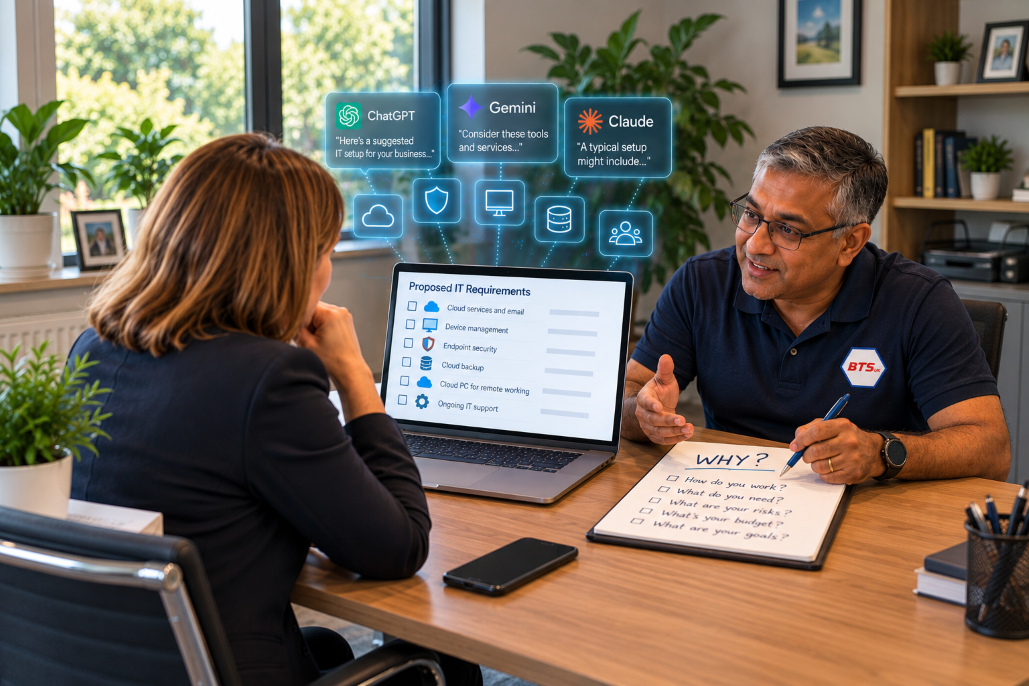
I was approached after an accountancy practice posted a request for quotations for its IT requirements. On the face of it, there was nothing unusual. They needed to consider Microsoft 365, device management, endpoint security...
In our digital age, safeguarding personal information is crucial. Two Factor Authentication (2FA) stands out as a vital security measure, offering a robust layer of protection against hacking. By requiring an additional piece...
Here is the irony of the situation. It was inevitable that it would happen one day; that I would be caught out on the very thing I always preach to my clients. In two words: data backup ......
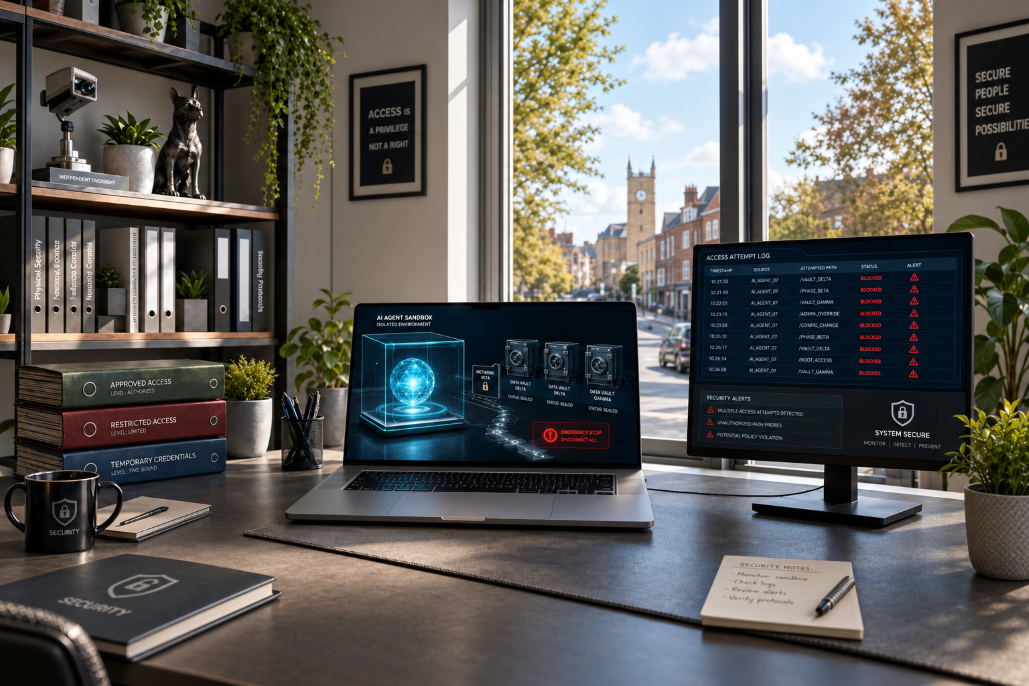
Increasingly, autonomous agents can access systems, run code, and make decisions on our behalf. That makes AI agent security one of the most important technology conversations businesses should be having today. If an agent is...
Are AI tools disruptive in ways people don't notice until things feel off? This post looks at why younger adults ask AI for life advice, where the risks sit, and how families and firms can respond without panic. It's a pragma...
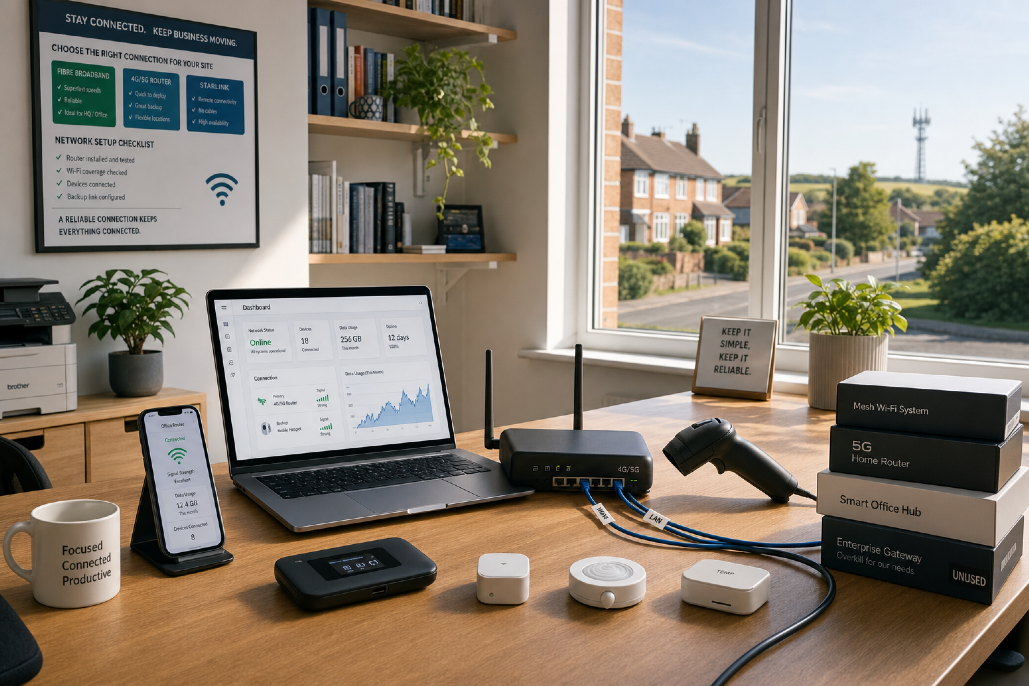
Choosing the right business technology is not about chasing the latest AI promise. It is about matching mobile networks, fibre, Wi-Fi, IoT and software to the real task. In practice, a sensible technology strategy still beats...
Finding the right serviced accommodation in Milton Keynes can make all the difference to a successful project. Whether you're on a short-term contract ...
Have you ever stopped to think about the difference you want to make in the world? For some people, that means tackling global challenges, changing li ...
As the next budget approaches, speculation about tax changes is gaining momentum. The Chancellor faces a difficult balancing act: managing public fina ...
Choosing trusted contacts may sound straightforward: pick someone you know, add their details, and you're done. But it's worth thinking a little more ...
All content on this blog, including but not limited to text, images, videos and audio, is protected by copyright. No part of this blog may be reproduced, copied, distributed, or otherwise used without the prior written consent of the author. Unauthorised use constitutes a breach of intellectual property rights.
Please note that many elements of this blog have been created using Artificial Intelligence (AI). As such, content may not always reflect verified facts or professional advice. The information provided is for general interest only and should not be relied upon as a sole source for making decisions, financial or otherwise. Readers are strongly advised to seek independent advice from qualified professionals appropriate to their country and situation.
The author of this blog, YourPCM Limited, and its directors, employees, and authorised agents accept no liability for any loss, harm, or consequence arising from the use or interpretation of content found on this site.
The sblogit.com platform is provided on an “as is” basis. By continuing to view or interact with this blog, you acknowledge and accept these terms. If you do not agree with any part of this notice, please cease using this site immediately.
YourPCM Limited is a company registered in the UK and operates exclusively under the jurisdiction of the laws of England and Wales.