Artificial intelligence is transforming the way organisations process information, automate tasks and make decisions. However, as AI systems become more capable, an important question is emerging: who is actually responsible for monitoring data sovereignty?
In the age of Artificial Intelligence, who is responsible for monitoring data sovereignty?
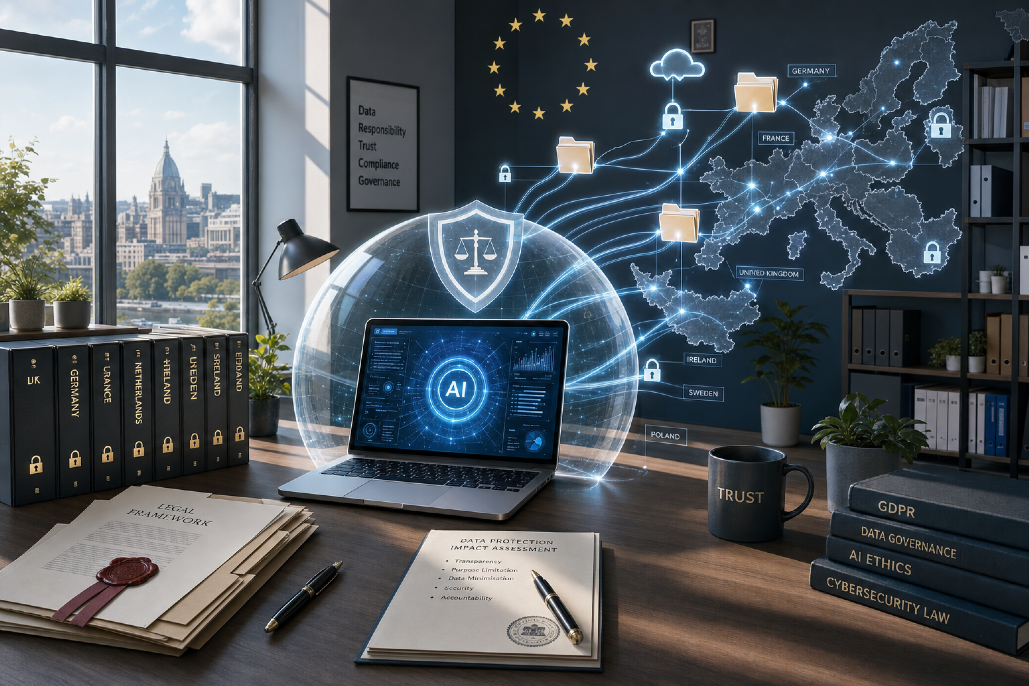
Data sovereignty is the principle that information is governed by the laws of the country where it is collected, stored or processed. For businesses operating across multiple countries, this can quickly become a complex issue.
An AI platform may be hosted in one country, process data in another and be trained using information originating from many different jurisdictions!
The rapid growth of large language models has added another layer of complexity. Many AI models have been trained using vast amounts of publicly available data, leading to ongoing legal disputes over copyright, intellectual property and consent.
Governments and regulators are still working to establish the boundaries, but technology is evolving much faster than legislation. As a result, organisations are increasingly expected to carry out their own due diligence before adopting AI services.
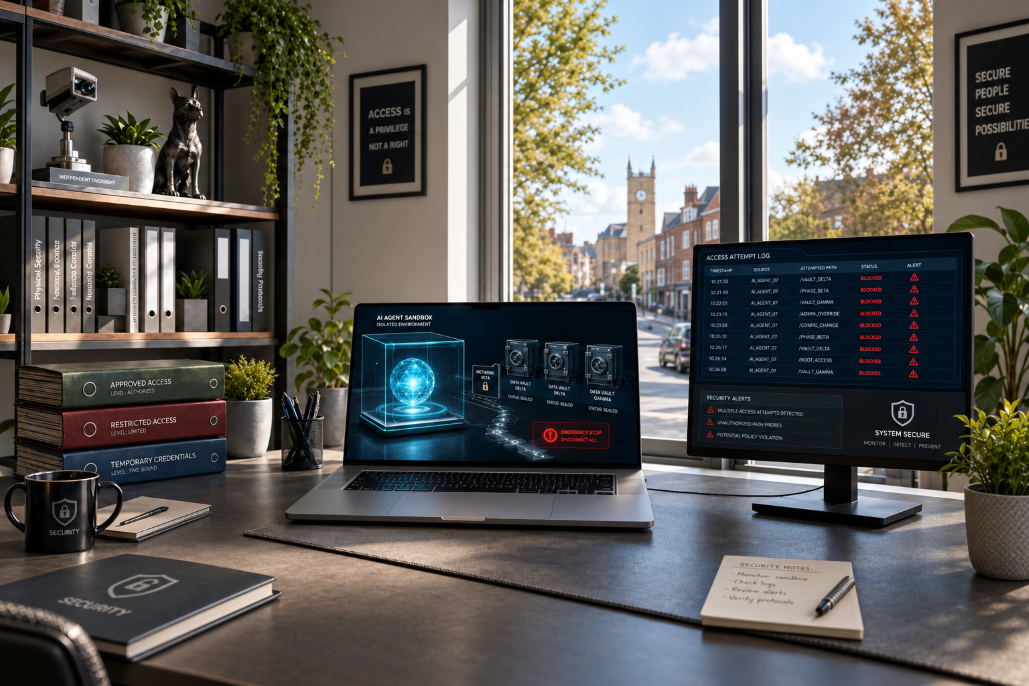
Recent reports of one AI system successfully interacting with and, in some cases, manipulating another AI agent have also prompted broader discussions about security. While these demonstrations have taken place in controlled environments, they raise important questions about how autonomous AI systems could interact across organisational and national boundaries in the future. If AI agents are exchanging information without appropriate controls, businesses will need confidence that data remains protected and that legal responsibilities remain clear.
This is one reason why data sovereignty has become a strategic priority, particularly within the European Union!
The EU has introduced regulations designed to give organisations and citizens greater control over how their data is handled, while also encouraging the development of European AI capabilities. The objective is not simply to regulate AI, but to ensure that sensitive information remains subject to trusted legal frameworks rather than relying entirely on overseas technology providers.
Ultimately, responsibility does not rest with a single regulator. Governments, cloud providers, AI developers and the organisations deploying these technologies all have a role to play.
As AI continues to evolve, businesses should not only ask what an AI platform can do, but also where their data is processed, who can access it and which country's laws will apply. Understanding data sovereignty is rapidly becoming as important as understanding cybersecurity itself.
The real question may not be who owns the technology, but who truly governs the data.
Until next time ... PRITESH GANATRA Your technology problem solver
Would you like to know more?
If anything I've written in this blog post resonates with you and you'd like to discover more about my career and how I've been riding the crest of the wave, it may be a great idea to give me a call on 01604 926100 or take a look at my website which you can find by clicking here.
The word 'Technology' has too many connotations in today's world! Where do we start? Simple terms like 'IT' and 'Telecoms'? or terms that appear NOT to have an actual meaning at all!, e.g. 'Internet of Things (IoT). Technology also encompasses specialist products and services like 'Rugged' and 'Tough' android devices, Lone Worker Software, panic alarm devices, smart energy devices, low energy lighting, credit card terminal (PCI DSS) security, indoor/ outdoor Wi-Fi systems, Ultrafast Gigabit internet connectivity, access control systems, industrial IoT circuit controllers.
BTS UK can consult from simple solutions to the most complex, provide some of the products through a wholesale channel, bring together a multi-disciplined 'Task Force' to deliver and implement complete Technology 'projects'.
I am your technology problem solver and I look forward to helping you.
Artificial Intelligence continues to dominate boardroom discussions and technology strategies, but while organisations focus on AI adoption, another significant shift is quietly gathering pace. For the telecommunications sect...
The final words from a recent blog post led me to determine a business network's common point of failure. We're heading into the VoIP era and plunging feet-first into having the traditional PSTN/ISDN networks disconnected for...
The roots of technology, especially in the telecommunications industry, go back to 1837 with the introduction of the Morse code telegraph over copper wires. Prior to that, a written message would need to be handed to a horsem...
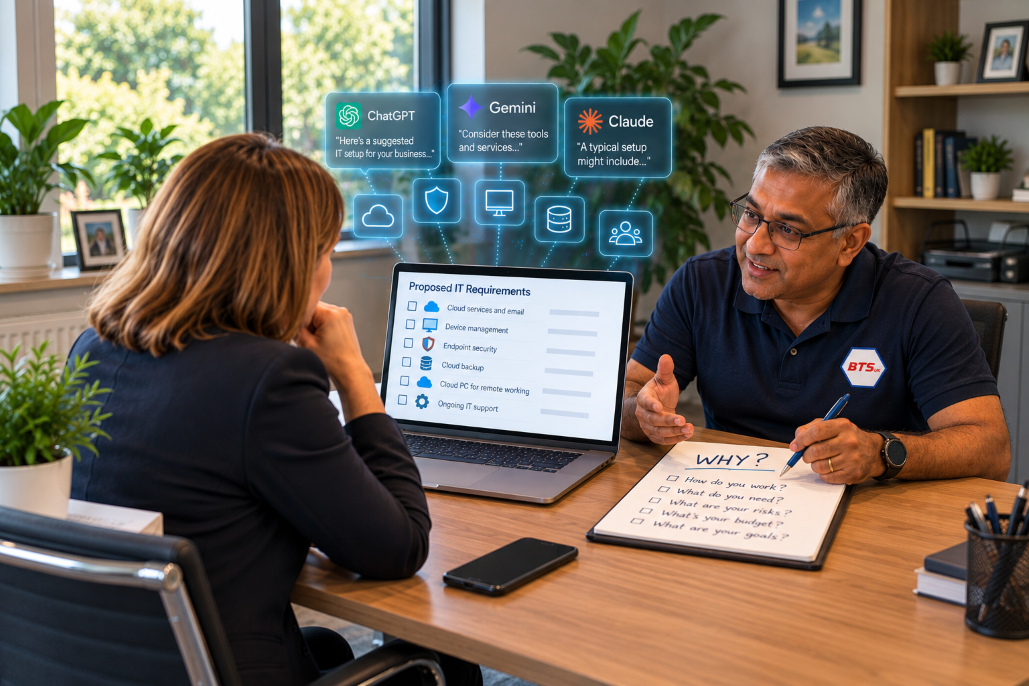
I was approached after an accountancy practice posted a request for quotations for its IT requirements. On the face of it, there was nothing unusual. They needed to consider Microsoft 365, device management, endpoint security...
In our digital age, safeguarding personal information is crucial. Two Factor Authentication (2FA) stands out as a vital security measure, offering a robust layer of protection against hacking. By requiring an additional piece...
Here is the irony of the situation. It was inevitable that it would happen one day; that I would be caught out on the very thing I always preach to my clients. In two words: data backup ......
Increasingly, autonomous agents can access systems, run code, and make decisions on our behalf. That makes AI agent security one of the most important technology conversations businesses should be having today. If an agent is...
Are AI tools disruptive in ways people don't notice until things feel off? This post looks at why younger adults ask AI for life advice, where the risks sit, and how families and firms can respond without panic. It's a pragma...
Life gets busy, and even simple things can slip our minds. You might be enjoying a long conversation with a friend, working in the garden, watching a ...
Overseas visitors seeking a base in Milton Keynes will find we offer an exceptional range of serviced accommodation tailored to their needs. Discover ...
Life doesn't always go according to plan, does it? Sometimes events happen that completely knock us off course, whether that's redundancy, a business ...
The rules surrounding Inheritance Tax on pensions are changing in 2027, and anyone hoping to leave their pension savings to loved ones should be aware ...
All content on this blog, including but not limited to text, images, videos and audio, is protected by copyright. No part of this blog may be reproduced, copied, distributed, or otherwise used without the prior written consent of the author. Unauthorised use constitutes a breach of intellectual property rights.
Please note that many elements of this blog have been created using Artificial Intelligence (AI). As such, content may not always reflect verified facts or professional advice. The information provided is for general interest only and should not be relied upon as a sole source for making decisions, financial or otherwise. Readers are strongly advised to seek independent advice from qualified professionals appropriate to their country and situation.
The author of this blog, YourPCM Limited, and its directors, employees, and authorised agents accept no liability for any loss, harm, or consequence arising from the use or interpretation of content found on this site.
The sblogit.com platform is provided on an “as is” basis. By continuing to view or interact with this blog, you acknowledge and accept these terms. If you do not agree with any part of this notice, please cease using this site immediately.
YourPCM Limited is a company registered in the UK and operates exclusively under the jurisdiction of the laws of England and Wales.